
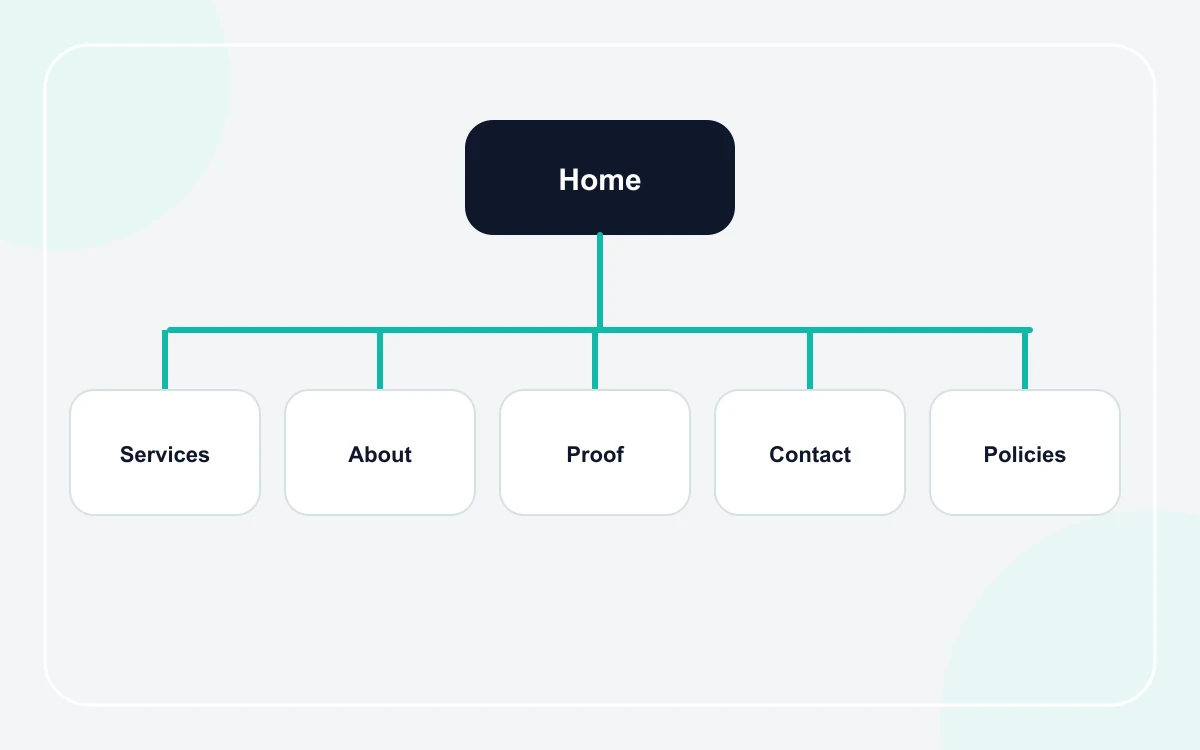
The core pages most small businesses need
| Page | Main job |
|---|---|
| Home | Explain the offer, audience, proof, and next action |
| Services | Describe what you provide and the boundaries of each service |
| About | Explain the business, team, process, and relevant credibility |
| Work or proof | Show projects, examples, credentials, or approved testimonials |
| Contact | Provide current contact methods, location or service area, and hours |
| Policies | Publish the policies that are relevant to how the website and service operate |
Next useful guides: How to create a business website step by step, What should a maintenance company website include?.
When should each service have its own page?
A separate service page is useful when the service has its own customer questions, examples, process, pricing logic, service area, or inquiry path. If several services need only one sentence each, a single well-organized services page may be clearer.
- Create a separate page when you can answer a distinct customer intent.
- Do not duplicate the same paragraph across many thin pages.
- Link related services where the customer may genuinely need both.
- Use descriptive page titles instead of internal company terminology.
The right pages change by business type
A contractor benefits from project case studies and quote requests, while a maintenance company needs faster service navigation and contact. Compare the contracting company website guide with the maintenance website guide to see how the structure changes.
Professional firms may need team and expertise information instead. See the professional services website guide.
Start small and add pages for a reason
Launch with the pages you can maintain accurately. Add a new page when customers repeatedly need information that does not fit well elsewhere, when a service deserves its own explanation, or when a real project creates a useful case study.
If you are planning the whole build, continue with the step-by-step business website guide or explore the templates to see common structures in context.
Frequently asked questions
Is a one-page website enough for a small business?
It can be enough for a very simple offer when all important information remains easy to scan. Separate pages become useful when services, projects, locations, or customer questions need more detail.
Do more pages automatically improve SEO?
No. More pages help only when they add useful, distinct information. Thin or duplicated pages can make the site harder to maintain and less useful to visitors.